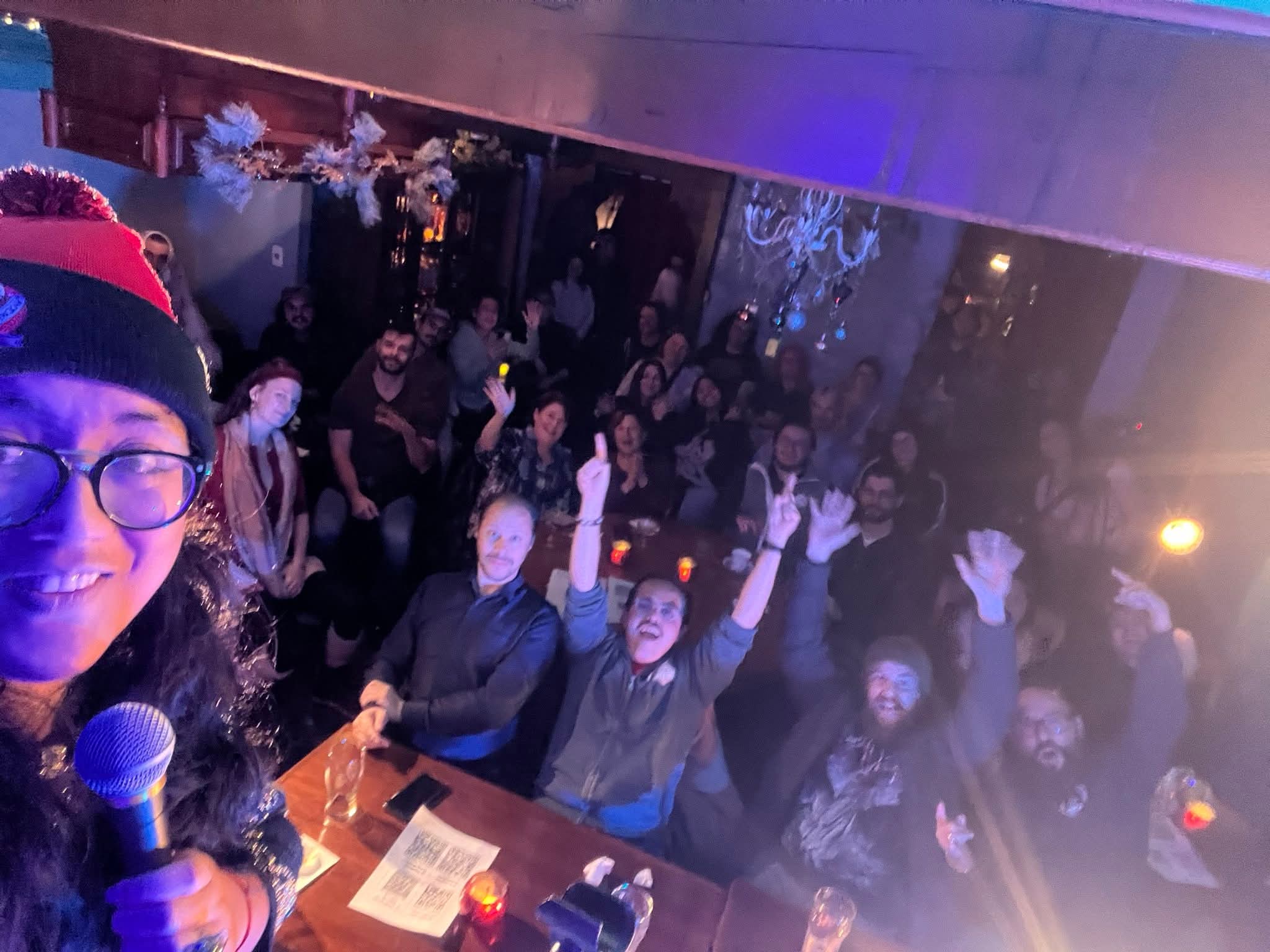
What Running a Comedy Room Taught Me About People
On audiences, energy, and building spaces where strangers can laugh together
When I first started running comedy shows, I thought the hardest part would be the comedy itself.
The lineups.
The jokes.
The marketing.
The ticket sales.
The logistics.
And yes, those things are difficult.
But honestly? Running a comedy room taught me far more about people than it did about comedy.
You learn very quickly that comedy rooms are emotional ecosystems. Every single person who walks into the room changes the energy a little bit: the audience, the bartender, the host, the comics, the loud table in the back, the nervous first-timer, the couple clearly on a bad date, the comic pretending they are not spiraling internally five minutes before their set.
A room is never just a room.
It is a collection of moods trying to coexist for two hours.
One of the biggest things running a comedy room taught me is that people want permission to connect more than they admit.
A lot of audiences come in guarded. People are tired. Burnt out. Socially awkward after years of living online. Some people are anxious about crowd work. Some are worried they won’t “get” the jokes. Some are there because a friend dragged them out and they secretly wanted to stay home.
But once the room relaxes, something shifts.
Strangers start laughing together.
Tables start talking to each other.
People loosen up.
The energy changes completely.
And you realize most people are desperately craving spaces where they can feel present with other human beings again.
Comedy just happens to be the excuse.
Running a room also teaches you that confidence and comfort are not the same thing.
Some of the loudest people in comedy are deeply insecure.
Some of the quietest people become monsters onstage.
Some comics who seem socially awkward offstage completely transform once they touch a microphone.
You start realizing how much performance exists in everyday life, not just in comedy.
People perform with confidence.
People perform with coolness.
People perform intelligence.
People perform emotional stability.
Especially in cities.
Comedy strips a lot of that away very quickly because audiences respond to honesty faster than polish.
Another thing comedy taught me is that energy is contagious.
One difficult person can shift an entire room.
One generous comic can save an entire show.
One good host can calm a tense audience in under thirty seconds.
One table laughing hard can unlock the entire room.
Human beings constantly regulate each other socially whether we realize it or not.
You also learn that people remember how a room felt more than specific jokes.
Audience members will sometimes come back weeks later and barely remember individual punchlines, but they remember:
- that the room felt welcoming
- that they laughed harder than expected
- that they met someone
- that the atmosphere felt alive
- that they forgot about work for a while
- that something about the night felt human
That part matters a lot.
Running comedy also taught me how badly people need third spaces.
Not work.
Not home.
Not algorithms.
Actual places where people can exist together.
Comedy rooms become strange little temporary communities. Every week you see regulars, new people, tourists, students, artists, exhausted office workers, divorced men discovering emotions for the first time through stand-up, and comedians trying to turn trauma into networking opportunities.
And somehow it works.
Most importantly, running a comedy room taught me that audiences are far more generous than comedians sometimes think.
Audiences want the show to succeed.
They want to laugh.
They want the comic to recover after a bad joke.
They want the room to feel good.
People are usually rooting for each other more than we realize.
But they can also feel when a room is careless.
They can feel when the lineup has no structure.
When the host is disconnected.
When nobody is steering the ship.
When the energy collapses and nobody fixes it.
That is why producing and hosting matter.
A good room does not happen accidentally.
It happens because someone is paying attention to people.
Not just the comedy.
The people.
If you want to experience that kind of room in person, come by Comedy on Mackay on Tuesday nights at N sur Mackay. We are not just trying to put on shows. We are trying to build a space where people can laugh, connect, and feel part of something local for a night.